
Copper Composite Conductors
Tungsten-Copper (W-Cu)
Copper-Diamond (Cu-Diamond)
Tungsten-Copper (W-Cu)
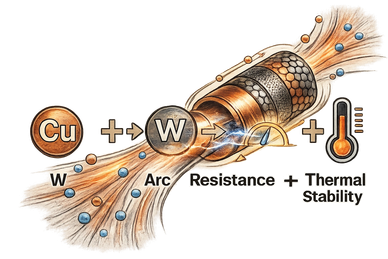
High Arc Resistance & Thermal Stability
Tungsten-Copper combines copper’s electrical and thermal conductivity with tungsten’s high melting point, low thermal expansion, and mechanical strength.
This composite is engineered for extreme electrical and thermal environments.
Key Advantages
- Exceptional arc erosion resistance
- High-temperature stability
- Low thermal expansion coefficient
- High mechanical strength
Typical Applications
- High-voltage switchgear
- Electrical contacts
- Circuit breakers
- Welding electrodes
- Power semiconductor heat sinks
Copper-Graphite
Copper-Diamond (Cu-Diamond)
Tungsten-Copper (W-Cu)
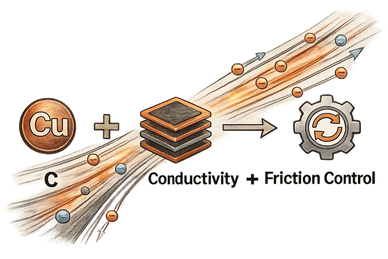
Conductivity with Friction Control
Copper-Graphite integrates copper’s electrical conductivity with graphite’s self-lubricating and wear-resistant properties.
It is optimized for dynamic electrical contact systems.
Key Advantages
- Stable electrical conductivity
- Reduced friction and wear
- High thermal tolerance
- Improved sliding performance
Typical Applications
- Electric motor brushes
- Sliding electrical contacts
- Rail and transit systems
- Industrial current collectors
Copper-Diamond (Cu-Diamond)
Copper-Diamond (Cu-Diamond)
Copper-Aluminium (Cu-Al) Clad
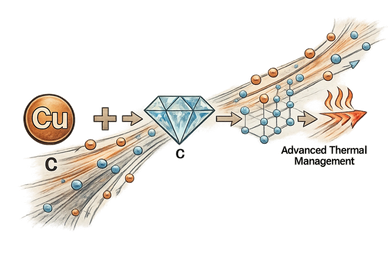
Advanced Thermal Management
Copper-Diamond composites combine copper’s conductivity with diamond’s exceptional thermal conductivity and adjustable thermal expansion.
This platform is designed for high-performance electronics requiring precise heat dissipation control.
Key Advantages
- Superior thermal conductivity
- Tailorable coefficient of thermal expansion
- Enhanced thermal stability
- Lightweight heat-spreading capability
Typical Applications
- Semiconductor laser submounts
- Power electronics modules
- RF components
- High-performance heat spreaders
Copper-Aluminium (Cu-Al) Clad
Copper Composite Conductor (CCC)
Copper-Aluminium (Cu-Al) Clad
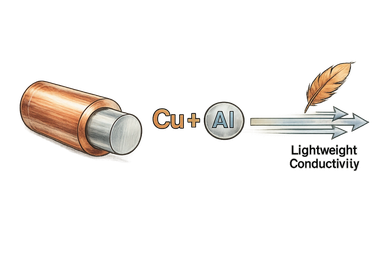
Lightweight Conductivity Optimization
Copper-Aluminium clad conductors use an aluminium core metallurgically bonded with copper.
This configuration balances electrical performance with reduced weight and material intensity.
Key Advantages
- Reduced weight compared to solid copper
- Balanced conductivity performance
- Cost-efficient material structure
- Scalable manufacturing
Typical Applications
- Electrical cables
- Busbars
- Transformers
- Industrial connectors
- Distribution systems
Copper-Steel Composite
Copper Composite Conductor (CCC)
Copper Composite Conductor (CCC)
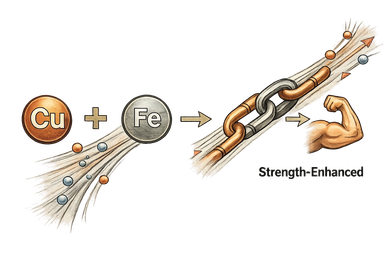
Strength-Enhanced Conductive Systems
Copper-Steel composites combine the conductivity of copper with the structural strength of steel.
They are designed for applications where both mechanical reinforcement and electrical performance are required.
Key Advantages
- High tensile strength
- Improved structural integrity
- Durable under mechanical stress
- Reliable electrical continuity
Typical Applications
- Grounding systems
- Reinforced conductors
- Overhead lines
- Structural electrical components
Copper Composite Conductor (CCC)
Copper Composite Conductor (CCC)
Copper Composite Conductor (CCC)
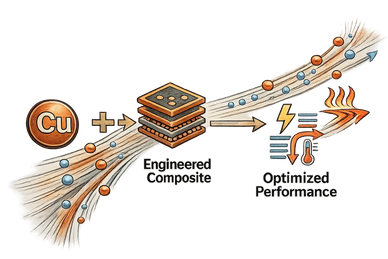
Engineered Composite Evolution
Building upon traditional composite technologies, CCC represents a refined conductor platform developed to optimize conductivity performance, thermal behavior, corrosion resistance, and mechanical stability.
CCC is engineered specifically for modern electrification systems where efficiency, durability, and scalability are critical.
Core Advantages
- Stable resistivity performance
- Enhanced thermal stability under load
- Optimized copper distribution
- Improved corrosion resistance
- Designed for scalable industrial production
Application Scope
- Residential and industrial wiring
- Busbar and power distribution systems
- EV charging infrastructure
- Renewable energy systems
- Industrial electrification